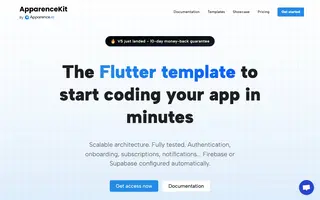
Power cross-platform SaaS apps with Dart and Flutter starter kits. Write one Dart codebase and ship to iOS, Android, and web with authentication, in-app purchases, and backend integration already wired up.
Created by a veteran Flutter agency founder, this Flutter app template helps developers launch profitable cross-platform apps faster with built-in monetization, authentication, and notifications powered by Firebase and RevenueCat.
Google's free AI workspace (formerly Project IDX): Gemini-powered agent that prototypes and builds full-stack apps — Next.js or Flutter — on the Firebase backend, in the browser.
Dart with Flutter targets iOS, Android, web, and desktop from a single source.
Dart compiles to native ARM and machine code for smooth 60fps mobile experiences.
Pair Flutter with Dart backends (Serverpod, Dart Frog) or Firebase for an all-Dart stack.
RevenueCat and in-app purchase integrations handle mobile billing complexity.
Discover popular technology combinations using Dart for your SaaS project
Vibe coding tools like Lovable and Bolt generate a working app from a prompt — but should you use one, or start from a boilerplate? An honest comparison by profile, product complexity, cost and code ownership.
Discover the key factors to consider when selecting a frontend language for your SaaS project. Compare TypeScript, JavaScript, Swift, and Dart to make an informed decision.
Compare modern frontend frameworks like Next.js, Nuxt, Vue, Angular, and Svelte. Learn about their strengths, use cases, and how to select the best one for your project.
Learn the essential steps to build a mobile SaaS application. Explore native vs cross-platform development, key technologies, and best practices for mobile-first SaaS solutions.
Explore comprehensive comparisons of backend languages and services, from Python and Node.js to Go and C#. Learn their strengths, limitations, and ideal use cases for your SaaS project.
Yes. Dart powers Flutter, the leading cross-platform UI toolkit, and increasingly runs on the backend via Serverpod and Dart Frog. It's ideal for SaaS products that need mobile apps alongside a web presence.
Mobile subscriptions typically go through RevenueCat, which wraps App Store and Google Play billing, while web payments use Stripe. Many Flutter boilerplates integrate both.
Not necessarily. Many Flutter SaaS boilerplates use Firebase or Supabase as a backend-as-a-service, while others pair with a Dart, Node, or Python API.