Build lightweight, flexible Python SaaS apps with Flask starter kits. Flask's minimal core lets you assemble exactly the stack you need, with authentication, Stripe billing, and SQLAlchemy models included in these production boilerplates.
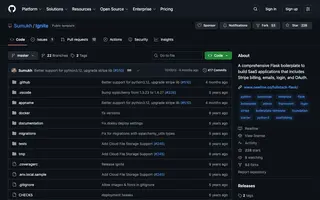
Created by Sumukh Sridhara, this Flask boilerplate helps developers rapidly build SaaS applications with integrated user authentication, team management, and Stripe billing functionality.
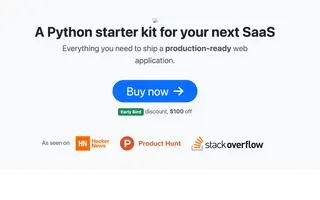
Created by Python developer Michael Sjöberg, this Flask boilerplate helps SaaS founders launch production-ready web applications faster with integrated Auth0, Stripe payments, and MongoDB connectivity.
Flask gives you a lean core so you choose your own extensions and structure.
Full access to Python's data, AI, and scientific libraries for smart SaaS features.
Flask's simplicity makes it a favorite for rapid prototyping and small teams.
Flexible, powerful ORM handling for relational data.
Discover popular technology combinations using Flask for your SaaS project
Vibe coding tools like Lovable and Bolt generate a working app from a prompt — but should you use one, or start from a boilerplate? An honest comparison by profile, product complexity, cost and code ownership.
Discover the key factors to consider when selecting a frontend language for your SaaS project. Compare TypeScript, JavaScript, Swift, and Dart to make an informed decision.
Compare modern frontend frameworks like Next.js, Nuxt, Vue, Angular, and Svelte. Learn about their strengths, use cases, and how to select the best one for your project.
Learn the essential steps to build a mobile SaaS application. Explore native vs cross-platform development, key technologies, and best practices for mobile-first SaaS solutions.
Explore comprehensive comparisons of backend languages and services, from Python and Node.js to Go and C#. Learn their strengths, limitations, and ideal use cases for your SaaS project.
Django is batteries-included with admin, ORM, and auth built in — faster for full products. Flask is minimal and flexible, letting you pick each piece. Choose Flask when you want a lightweight, custom stack; Django when you want conventions.
Yes. Flask powers many production applications. You'll add extensions for auth, ORM, and migrations yourself, which the boilerplates here preconfigure so you get a production-ready starting point.
Very well. Being Python, Flask connects seamlessly to OpenAI, LangChain, and ML libraries, making it a natural backend for AI-powered SaaS products.