Filter by Technology

SaasRock
149-1999$Created by experienced SaaS developer Alexandre, this Remix-based boilerplate helps B2B founders launch production-ready SaaS applications faster with 25+ pre-built features including Stripe integration, workflows, and entity builder.
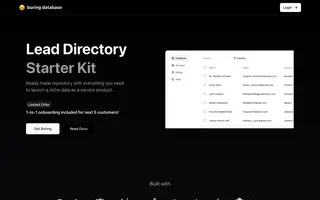
Boring Database
160$Created by Fraser Robb, this Remix.js boilerplate helps entrepreneurs launch niche lead directory businesses quickly with pre-built Stripe payments, authentication, and data management powered by Prisma ORM.

Launchway
99$Created by Brian Briscoe, a veteran web developer, this Remix-based SaaS starter kit helps developers launch production-ready web applications faster with integrated authentication, payments, and multi-tenant functionality.

Remixtape
350-1550$Created by Mokhtar, this Remix-based SaaS boilerplate helps developers and entrepreneurs launch production-ready web applications faster with built-in authentication, team management, and Stripe payment integration.