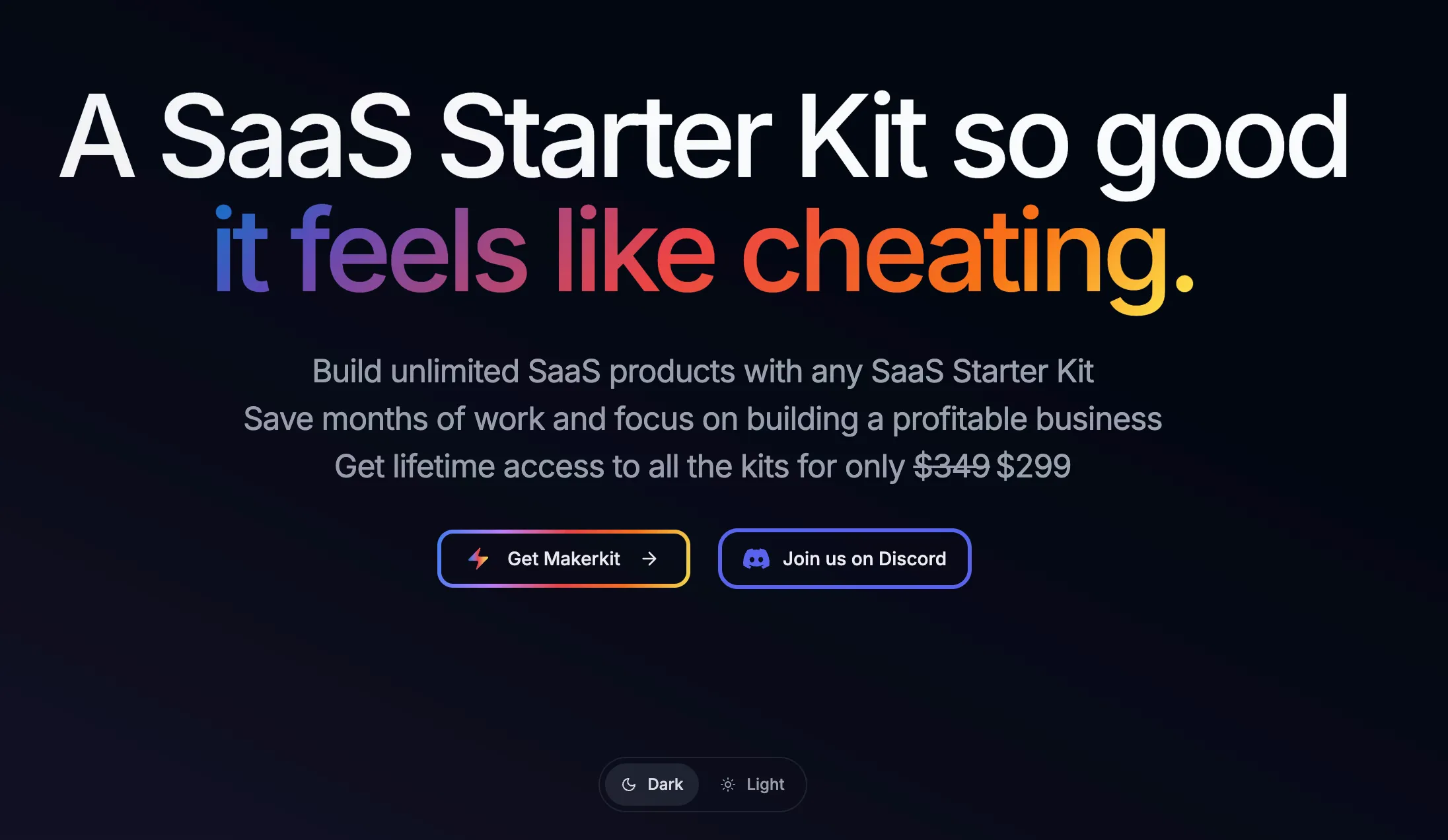
| Price | $299 - $599 |
| Published | 08/29/2025 |
| Rating | |
| Developer | Giancarlo Buomprisco |
Makerkit Overview
Makerkit is a web SaaS boilerplate built with Next.JS and Supabase. It is written in TypeScript and Backend as a Service and uses PostgreSQL and Redis for data storage. Payments and subscriptions are handled through Stripe and LemonSqueezy. Priced at $299 to $599, Makerkit helps developers skip weeks of boilerplate work — authentication, billing, database setup, and deployment configuration are ready out of the box, so you can focus on the features that make your SaaS unique.
Makerkit is a comprehensive Next.js SaaS boilerplate created by Giancarlo Buomprisco, a veteran software engineer with 15+ years of experience. This production-ready framework seamlessly integrates essential services including Supabase for backend operations, Stripe for payments, and shadcn/ui for modern UI components, providing a complete foundation for building scalable SaaS applications.
The boilerplate has been battle-tested in numerous production environments and maintains exceptional code quality through comprehensive TypeScript integration. With regular updates and extensive documentation, developers receive a robust foundation that significantly reduces development time. The framework includes advanced features like multi-tenancy support, role-based access control, and team management capabilities out of the box.
Ideal for startup founders and development teams building modern SaaS applications, Makerkit excels in scenarios requiring robust authentication, complex team structures, and scalable infrastructure. Its distinctive advantage lies in its flexible architecture, allowing developers to choose between different authentication providers, databases, and email services while maintaining a cohesive development experience.
Technical benefits include server-side rendering optimization, built-in SEO capabilities, and a comprehensive component library based on shadcn/ui and Tailwind CSS. The framework provides extensive testing infrastructure, CI/CD configurations, and developer tools like ESLint and Prettier pre-configured for optimal development workflow.
The platform stands out through its enterprise-ready features including advanced security implementations, comprehensive audit logging, and flexible deployment options supporting various cloud providers. With support for both PostgreSQL and Redis, along with multiple email provider integrations, Makerkit provides the flexibility needed for complex SaaS applications while maintaining simplicity in implementation.
Frontend Languages
Backend Languages
Frontend Frameworks
Backend Frameworks
Databases
Makerkit — Frequently Asked Questions
What technology stack does Makerkit use?
Makerkit is built with Next.JS and Supabase, using TypeScript and Backend as a Service and PostgreSQL and Redis for the database. It's a web SaaS starter kit designed for production use.
How much does Makerkit cost?
Makerkit is priced at $299 to $599. As a one-time investment, a boilerplate like this typically pays for itself by saving weeks of development time.
Is Makerkit good for building a SaaS?
Makerkit is aimed at developers who want to launch faster. It ships with the essentials most SaaS products need, including Stripe and LemonSqueezy billing, so you avoid rebuilding authentication, payments, and deployment from scratch.
What are the best alternatives to Makerkit?
Popular alternatives to Makerkit with a similar technology stack include LaunchFast, ShipFast, and Supastarter. You can compare them side by side in our directory to find the best fit for your project.
Looking for alternatives? See our full comparison: best Makerkit alternatives in 2026.